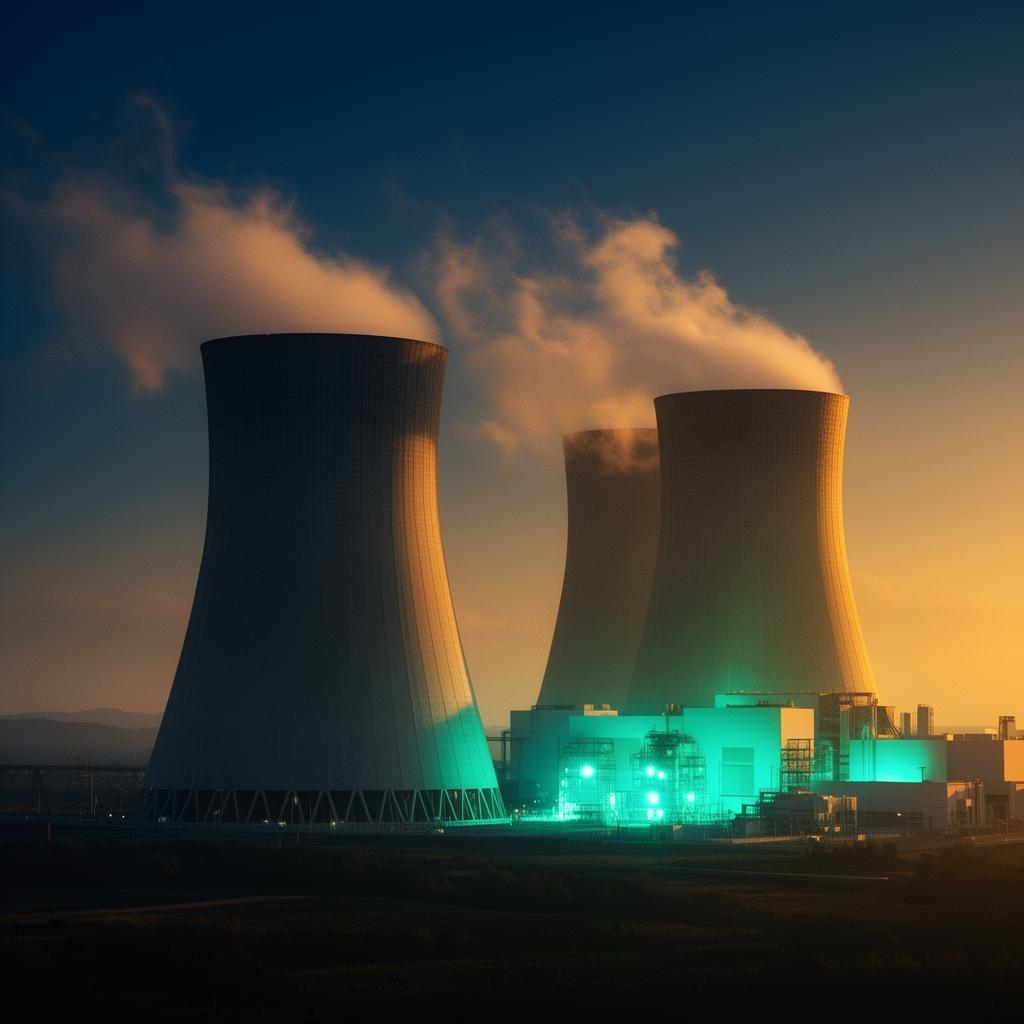
What is the best path to global energy abundance?
A debate between renewables-led, nuclear-led, and pluralist strategies — all face buildout, materials, and geopolitical constraints.
Key takeaway
Energy abundance requires both massive renewable buildout and firm low-carbon sources; the mix is regional.
Why this matters
Energy is the master resource. Cheap, abundant, clean energy lifts billions out of poverty, underwrites climate adaptation, powers AI and biotechnology, desalinates water, replaces extractive industry with synthesis, and gives democracies strategic depth against fossil-resource autocracies. Every other priority — health, security, climate, computation, education — is downstream of the energy stack.
The scale of the opportunity is genuinely historic. Global primary energy demand is set to double by 2050 if the developing world reaches even half of OECD per-capita energy use, and the technologies to deliver that demand cleanly now exist or are visible from here. The question is no longer whether energy abundance is achievable but how fast and at what political cost.
The answer matters not just for climate, but for the geopolitical balance of the next century. The countries and regions that build the materials supply chains, manufacturing capacity, skilled workforce, and regulatory infrastructure for the new energy system will set the terms — economically and politically — for everyone else.
Perspectives at a glance
"Solar + storage learning curves dominate."
Solar PV costs have fallen 90% in a decade and battery costs roughly 85%, with both trajectories still bending downward. By 2030, solar + battery hybrid plants will be the marginal least-cost energy source in the majority of populated geographies. The relevant deployment constraint is no longer cost — it is permitting, interconnection queues, transmission, and skilled labor. Doubling down on those constraints is the highest-leverage policy in front of us, larger than any single technology bet.
"Critical minerals constrain everything."
Lithium, cobalt, nickel, copper, rare earths, and graphite are concentrated in a small number of countries — and the refining, where most value is captured, is even more concentrated. China currently refines 60–90% of global supply for most of these materials. Energy abundance via electrification is materials-intensive, and materials sovereignty is a precondition for it. Without a serious industrial-policy response on mining, refining, and substitution research, the renewables transition trades fossil-fuel dependency on the Middle East and Russia for mineral dependency on a single peer competitor.
"Permitting and grid interconnect are the binding constraints."
Generation has won the cost battle. The bottleneck has moved upstream and downstream — permitting timelines for new transmission lines run a decade in most OECD countries, interconnection queues for new generation are now 2,000+ GW in the US alone, and skilled-labor shortages in electrical work are choking deployment. Permitting reform, queue reform, and workforce policy are now higher-leverage than any further generation-cost decline.
"Demand-side matters as much as supply."
Every MWh saved through efficiency, heat pumps, building retrofits, and electrification of process heat is a MWh we don't need to generate, transmit, store, or finance. Demand-side measures are typically cheaper per ton of CO₂ avoided than supply-side and have compound benefits across air quality, energy security, and household economics. Treating 'abundance' as purely a supply-side problem misses half the available wedge.
"Fusion and advanced geothermal are closer than the consensus thinks."
Multiple private fusion companies are now demonstrating breakeven-class physics, and enhanced geothermal is rapidly leveraging fracking-derived drilling techniques to access vast subsurface heat. Either could, within fifteen years, add a new firm zero-carbon source at scale. The path to abundance does not depend on these technologies — but it accelerates significantly if even one of them works on the timelines their proponents claim.
Final synthesis
Energy abundance is technically achievable this decade. The bottleneck is political and industrial, not scientific.
Background and Context
Solar, wind, and battery costs have fallen faster than any major energy forecaster predicted, while nuclear costs have stagnated or risen in most OECD markets. Global electricity demand is set to roughly double by 2050 driven by EV adoption, building electrification, industrial decarbonization, and compute. The technical possibility of abundant clean energy is no longer in serious dispute; the implementation path is.
Supporting Arguments
- Renewable + storage costs are below incumbent fossil costs in most geographies and still falling.
- Multiple complementary firm-power options exist (nuclear, geothermal, hydro, eventually fusion).
- Electrification expands the addressable market for clean MWh.
- Industrial-policy precedents (semiconductors, solar PV itself) show that aggressive supply-chain buildouts work.
Counterarguments
- Permitting and grid buildout have not kept pace with generation cost declines.
- Critical mineral supply chains are concentrated and fragile.
- AI and electrification may grow demand faster than supply can be built.
- Political backlash against transmission, mines, and large infrastructure is rising in democracies.
Areas of Consensus
- Renewables will do the majority of new buildout this decade.
- Some firm low-carbon capacity is required for a fully decarbonized grid.
- Permitting reform is the highest-leverage near-term lever.
- Materials and grid investment must scale alongside generation.
Areas of Disagreement
- What share of firm capacity should come from nuclear vs. geothermal vs. long-duration storage.
- How quickly fusion will commercialize, if at all.
- Whether demand-side or supply-side is the higher-leverage near-term focus.
- How aggressive industrial policy on materials should be.
Confidence Assessment
High confidence that energy abundance is technically achievable by mid-century, medium confidence on timeline and mix, low confidence on which specific firm-power technologies dominate. The remaining uncertainty is overwhelmingly political and industrial rather than technical.
Was this useful?
Your rating helps prioritize future debates.
Ask a follow-up question
Dive deeper, challenge an assumption, or explore an angle these perspectives missed.